
When an airplane lands, it is still moving at very high speed.
To slow down safely, pilots use several systems together: wheel brakes, spoilers, and something called a thrust reverser.
In this article, you will learn what a thrust reverser is, how it works, and why it is so important for safe landings.
What Is a Thrust Reverser?
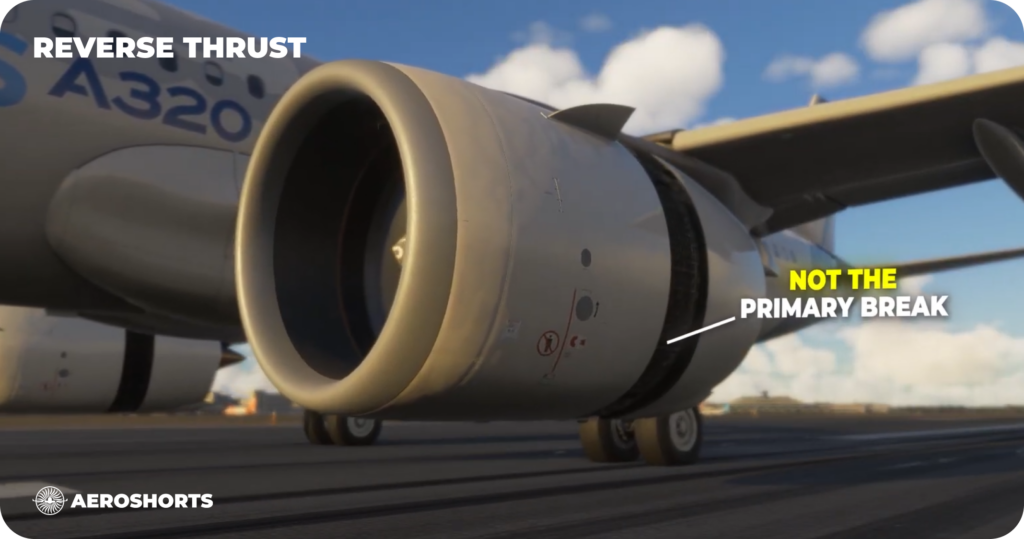
A thrust reverser is a system on an aircraft engine that helps slow the airplane after landing.
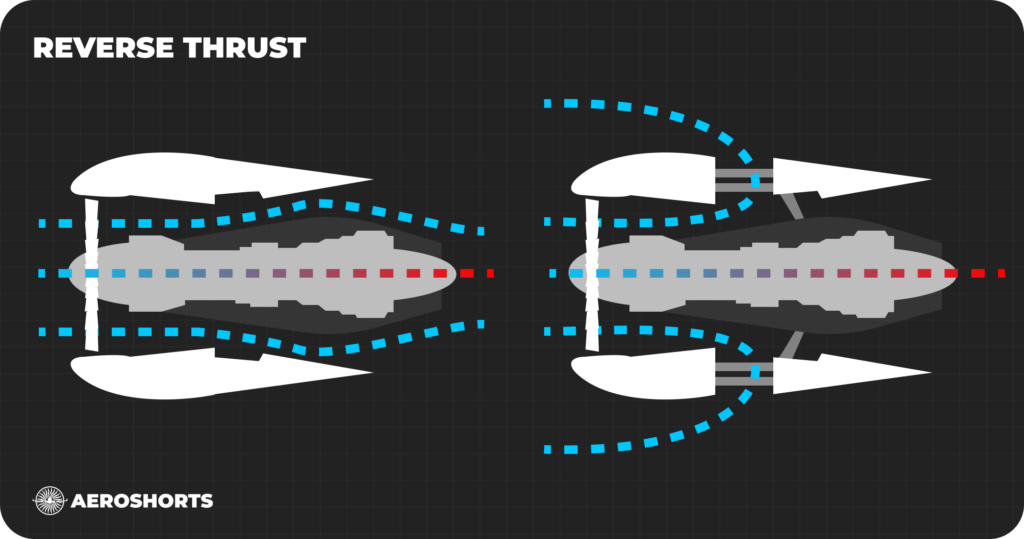
Normally, an engine pushes air backward to move the aircraft forward.
With a thrust reverser, part of that airflow is redirected forward, creating a braking force.
Important:
- Thrust reversers do not replace wheel brakes
- They only help, especially at high speed after touchdown
Why Do Airplanes Use Thrust Reversers?
Wheel brakes alone are not perfect at high speed.
Here are the main reasons thrust reversers are used:
1. Better Deceleration at High Speed
Right after landing, the aircraft is very fast.
Thrust reversers work best at high speed, when a lot of air is moving through the engine.
2. Less Brake Wear
Brakes turn speed into heat.
Using reverse thrust reduces:
- Brake temperature
- Brake wear
- Risk of brake fade
3. More Safety on Short or Wet Runways
On wet, icy, or short runways, tire grip is limited.
Thrust reversers help slow the aircraft without relying only on tire friction.
How Does a Thrust Reverser Work?
The exact design depends on the engine type.
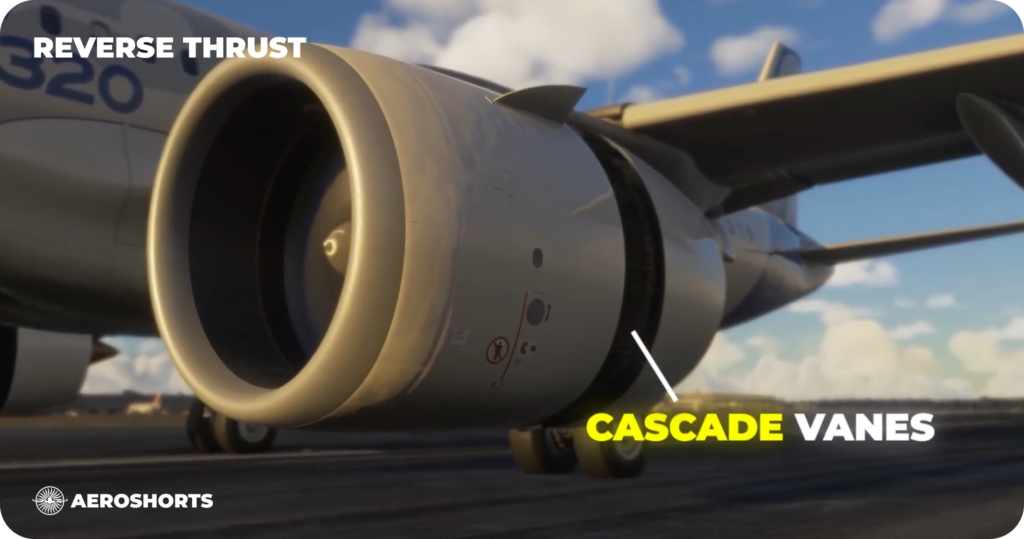
Most modern passenger jets use turbofan engines with a cascade-type thrust reverser.
Step by Step:
- The airplane touches down
- Spoilers deploy and wheel brakes start working
- The pilot pulls the thrust levers into reverse
- Inside the engine:
- Blocker doors close the normal bypass airflow path
- Panels open on the engine nacelle
- Bypass air is forced out through special vanes
- These vanes redirect the air forward and outward
- This forward airflow creates a braking force
Important detail:
The hot engine core exhaust still goes backward.
So reverse thrust is not 100% backward thrust.
It mainly redirects the cooler bypass air.
Different Types of Thrust Reversers
Cascade Type (Modern Jets)
- Used on most modern airliners
- Redirects bypass air through side vanes
- Very efficient and quiet
Bucket or Target Reversers (Older Jets)
- Doors move behind the engine
- Deflect exhaust forward
- Common on older jet designs
Propeller Aircraft
On turboprop planes:
- The propeller blades change pitch
- They push air forward directly
- This creates strong reverse thrust
When Is Reverse Thrust Used?
Reverse thrust is mainly used:
- Right after touchdown
- At high speed during the early landing roll
As the aircraft slows down:
- Reverse thrust becomes less effective
- Pilots reduce reverse
- Wheel brakes do most of the work at low speed
At very low speed, reverse thrust is usually turned off to avoid:
- Blowing debris forward
- Damaging engines or structures
Is Reverse Thrust Dangerous?
Reverse thrust is very safe when used correctly.
However, deploying thrust reversers in flight is extremely dangerous.
Because of this:
- Systems are designed with strong safety protections
- Certification rules focus heavily on preventing in-flight deployment
A famous example is the Lauda Air accident, where an in-flight thrust reverser deployment led to loss of control.
This is why modern systems have multiple layers of protection.
Thrust Reverser vs Wheel Brakes
They always work together:
- Spoilers reduce lift and put weight on the wheels
- Wheel brakes start working at touchdown
- Reverse thrust is added shortly after
- Both overlap during early rollout
- At low speed, brakes finish the stop
So the correct idea is:
Brakes start first. Reverse thrust helps early. Brakes finish the stop.
Conclusion
A thrust reverser is a smart system that helps airplanes slow down safely after landing.
It:
- Redirects airflow forward
- Works best at high speed
- Reduces brake stress
- Improves safety on difficult runways
It does not replace brakes, but it makes landings safer, smoother, and more efficient.
Simple aviation, explained. ✈️